Contenidos
- Designing Unique Homes in Natural Paradises Has Become a Trend
- The Evolution of Luxury Architecture in Exclusive Destinations
- The Key Role of the Tropical Environment in Residential Design
- Integrating Nature Through Sustainable and Harmonious Design
- Local Materials and Passive Technologies for Thermal Comfort
- Redefining Exclusivity Through Absolute Privacy
- Seamless Transitions That Blur Indoor and Outdoor Boundaries
- Overcoming the Challenges of Coastal Construction
- Innovative Structures Built to Withstand Extreme Weather
- The Visual and Functional Impact of Leading Architecture Firms in the Bahamas
- An Architectural Legacy That Benefits Ecosystems and Communities
Designing Unique Homes in Natural Paradises Has Become a Trend
The traditional idea of what defines a high-end residence has undergone a notable transformation in recent years. Rather than chasing urban ostentation, homeowners and developers are now turning their attention to environments where nature sets the rules. The Bahamian archipelago, with its islands and cays surrounded by crystal-clear waters, has become one of the most sought-after settings for designers aiming to create exclusive retreats that respect the landscape.
Designing livable spaces in such pristine locations requires far more than eye-catching plans or luxury furnishings. It demands a level of sensitivity that understands the site’s topography, climate, and identity, translating those conditions into coherent architectural solutions. Professionals working on these islands act as mediators between environment and habitation, ensuring that every built element feels as if it naturally belongs to the island itself.
The shift toward quieter, remote environments reveals a new hierarchy of values: clean air, serenity, and the ability to disconnect from fast-paced living. Contemporary luxury homes in these settings are conceived as sanctuaries where quality of life, reflective silence, and the strong presence of the sea take center stage. This mindset has reshaped not only how these homes look, but also how they function.
The Evolution of Luxury Architecture in Exclusive Destinations
There was a time when luxury meant an accumulation of materials and visible ornamentation, but today the focus is on integration with the landscape and respect for the character of the place. New constructions in the Bahamas favor clean lines, volumes that follow natural contours, and heights that preserve views and the human scale of coastal surroundings. This approach avoids dominating the landscape and instead promotes a more subtle and elegant presence on the island.
Designers invest significant effort into studying year-round solar patterns, prevailing winds, and the limestone terrain typical of the region. This analysis directly shapes spatial orientation, solar protection strategies, and the design of transitional spaces between indoors and outdoors. The goal is to make each home feel like it truly belongs to the island, as if it had grown there organically.
The preference for open, fluid layouts reflects a desire to place the environment at the center of the project. By reducing visual barriers and embracing functional minimalism, attention shifts toward the seamless connection between the home and the turquoise horizon. The result is residences that act as frames for the landscape rather than objects that interrupt it.
The Key Role of the Tropical Environment in Residential Design
Caribbean climate conditions completely shape the architectural approach of any home designed to stand the test of time. The intensity of sunlight requires effective shading solutions such as deep overhangs, pergolas, and louvers that filter radiation without darkening interiors. Designing these elements with aesthetic coherence reduces reliance on mechanical systems for thermal comfort.
Wind plays a decisive role in spatial configuration and the placement of openings, encouraging cross ventilation that improves thermal comfort and reduces dependence on artificial cooling. Planning airflow paths and proper orientation allows sea breezes to naturally ventilate main living areas, creating a constant sensory connection with the outdoors. This approach enhances occupant well-being and reinforces the experience of living in direct contact with the landscape.
Water management and protection against salt corrosion must also be considered, as they directly affect the durability of materials and systems. Integrating passive solutions and resilient components from the outset helps reduce long-term maintenance. In every case, architecture aims to extend the lifespan of the home without compromising comfort or beauty.
Integrating Nature Through Sustainable and Harmonious Design
Building within a fragile ecosystem like the Bahamas requires sustainable thinking from the very first sketch. Coral reefs and marine biodiversity demand protective measures that minimize land disturbance and preserve coastal water quality. Careful planning of access routes, construction loads, and site operations reduces both physical and visual impact on sensitive landscapes.
Self-sufficiency is highly valued in residences located far from conventional infrastructure, leading designs to include rainwater harvesting systems and discreet storage solutions. Integrating solar energy into rooftops and enabling small-scale generation through compatible technologies allows for clean energy production without compromising aesthetics. These strategies support energy independence and reduce the environmental footprint of the home.
Caring for the environment does not conflict with comfort or sophistication—quite the opposite. The best approach ensures that sustainable solutions remain invisible to the user, delivering a high-end experience without ecological drawbacks. The combination of technical expertise and landscape sensitivity turns each project into an opportunity to show that responsible living is itself a form of luxury.
Local Materials and Passive Technologies for Thermal Comfort
Selecting materials that can withstand marine exposure and humidity is a central challenge in coastal design. Local architecture relies on coral stone, marine-grade concrete, and carefully chosen woods known for their strength and durability. These choices are driven by both technical and aesthetic considerations, as these materials age gracefully and develop character over time.
Using materials that evolve naturally reduces the need for constant intervention and aligns maintenance cycles with locally available resources. This approach supports long-term efficiency while highlighting the skills and craftsmanship of island communities. At the same time, combining passive systems such as natural ventilation and strategic shading ensures comfort without excessive reliance on electricity.
Consistency between materials, construction details, and environment is essential for maintaining both functionality and beauty over decades. Designing with climate, solar exposure, and salinity in mind ensures that every component contributes to a balanced and resilient whole. In this way, building by the sea becomes an exercise in both technical foresight and aesthetic sensitivity.
Redefining Exclusivity Through Absolute Privacy
In contemporary island luxury, exclusivity is defined by the ability to offer complete privacy and intimate experiences. Homeowners value the opportunity to retreat unseen, leading projects to incorporate natural screens made from native vegetation. These green barriers protect internal views while creating microclimates that enhance everyday living.
Facades facing public access points tend to remain discreet, while private spaces open toward interior courtyards, gardens, or secluded beaches. This visual control strategy allows the home to offer varying levels of connection with its surroundings, from enclosure to full openness toward the coastline. The result is a home that provides refuge while maintaining strong ties to the landscape.
A sense of spaciousness is achieved not through excess, but through intelligent transitions between interior and exterior areas, extending living spaces visually and physically into terraces and platforms. This design approach enhances usability and the perception of freedom without sacrificing protection or comfort. Exclusivity is expressed through details that elevate privacy while preserving a full connection to the environment.
Seamless Transitions That Blur Indoor and Outdoor Boundaries
One of the most valued achievements of contemporary Caribbean architecture is its ability to dissolve the boundary between inside and outside. Large motorized glass panels that disappear into walls remove traditional barriers, creating a continuous flow that encourages barefoot movement between rooms and gardens. This direct relationship with the outdoors responds to the warm climate and promotes a relaxed, nature-connected lifestyle.
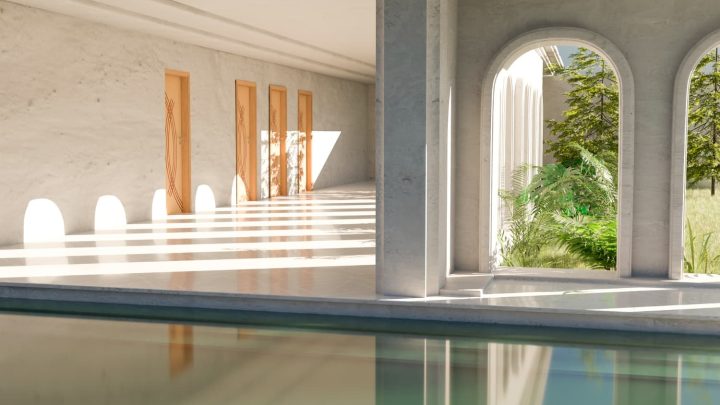
Infinity pools aligned with the color of the sea, outdoor showers framed by natural stone walls, and pathways leading to private viewpoints are design solutions that intensify the sensory connection to the island. These choices ensure that everyday moments are enriched by visual and auditory elements from the surroundings. The home becomes not just a container, but a platform for living.
Through these strategies, a balance is achieved between protection and openness, security and sensory immersion. Architecture acts as a mediator, allowing the island to become part of daily life while safeguarding privacy. The result is a way of living that is both secluded and deeply connected to the landscape.
Overcoming the Challenges of Coastal Construction
Building in remote island locations requires rigorous planning and exceptional coordination between teams. Many materials and prefabricated elements must be transported by sea, demanding specialized packaging, precise delivery schedules, and processes that minimize risk. Even small errors can affect timelines and budgets, making foresight a critical factor in project success.
Sandy or unstable soils require deep foundations and specialized technical solutions to ensure long-term stability. Construction must address both structural work and fine finishes in an environment with limited resources, making labor and supply logistics a key concern. These conditions demand multidisciplinary teams with experience in island contexts and complex operational coordination.
Local regulations and permitting processes often add further complexity, requiring knowledge of the territory and ongoing communication with authorities. Adapting to import timelines and integrating responsible construction practices directly impacts both scheduling and economic feasibility. This is why experienced firms with strong management capabilities stand out in ensuring smooth and coherent project execution.
Innovative Structures Built to Withstand Extreme Weather
The Bahamas are located in a region with frequent cyclonic activity, making hurricane resistance a requirement from the conceptual phase. Aerodynamic roof designs, reinforced structures, and high-capacity anchoring systems are discreetly integrated into the architectural language. This allows homes to maintain a light appearance while delivering exceptional structural strength.
The use of impact-resistant glass, concealed steel framing, and reinforced connections is standard in projects that aim to ensure safety without compromising views or visual lightness. These technical components are paired with resilience strategies such as efficient drainage systems and pre-planned replacement parts. The goal is for the home to withstand extreme events with minimal damage and recover quickly.
Achieving this balance requires expertise, testing, and certification to validate each solution. Resilient architecture not only protects occupants but also reduces repair costs and environmental impact. Strength and aesthetics become complementary goals within the project.
The Visual and Functional Impact of Leading Architecture Firms in the Bahamas
Balancing safety, comfort, sustainability, and refined aesthetics is a challenge only firms with a strong practical and creative vision can overcome. In this context, specialized studios play a key role in raising the standards of island design. A clear example is the work of Ezlo Architects, which shows how luxury architecture can organically engage with demanding ecosystems.
These firms operate with the understanding that each island has its own microclimate and identity, avoiding generic solutions and instead delivering tailored responses for every site. Their work covers the entire project lifecycle, including construction coordination, relieving clients from the stress of building far from their primary residence. This end-to-end approach is what sets them apart in complex developments.
Their expertise in import logistics, local team selection, and regulatory frameworks allows them to create projects that respect the landscape while supporting the local economy. The presence of experienced firms attracts investment and activates networks of suppliers and artisans, contributing to a value chain that benefits island communities. In this way, high-quality architecture becomes a driver of both development and preservation.
An Architectural Legacy That Benefits Ecosystems and Communities
Building to high standards not only provides homeowners with exceptional retreats, but also creates positive impacts for communities and natural environments. Well-executed projects highlight local craftsmanship and traditional techniques, incorporating regional materials and skills into a respectful dialogue between modern and ancestral practices. This integration helps preserve knowledge and create employment opportunities in island settings.
Projects that prioritize efficiency and environmental responsibility serve as benchmarks for future developments, demonstrating that it is possible to inhabit natural paradises without degrading them. Their best practices influence regulations and market expectations, promoting models focused on durability and minimal intervention. Architecture thus becomes a tool for preserving the magic of the place while contributing to social well-being.
The tangible result is a legacy that blends technological innovation with ecological sensitivity, where each project becomes a reference point for sustainability and excellence. When architecture is practiced responsibly, islands gain in environmental and social quality, reinforcing their appeal as destinations where design and nature coexist in harmony.